
Bringing home a rescue bird is a compassionate act that opens the door to a unique and rewarding companionship. However, many rescue birds come with a history that makes them fearful, particularly of human hands. If your new feathered friend cowers, hisses, or flees whenever you reach toward them, know that you are not alone, and this behavior is not a permanent sentence. With patience, empathy, and a commitment to positive reinforcement, you can help your bird overcome their fear and build a bond based on trust. This guide will walk you through the step-by-step process of turning a hand-shy bird into a confident companion.
Understanding the Fear: It’s Not Personal
Before you can begin to build trust, it’s crucial to understand the world from your bird’s perspective. To a small bird, a human hand is a large, predatory object. In the wild, being grabbed usually means one thing: being eaten.
For rescue birds, this instinctual fear is often compounded by past experiences. They may have been grabbed forcefully, handled roughly, or simply not socialized with humans at all. Your goal is to rewrite this narrative, teaching them that hands are a source of good things like treats, head scratches, and freedom. This process, known as desensitization and counter-conditioning, requires you to work at the bird’s pace, never forcing an interaction they are not ready for.
Step 1: Setting the Stage for Success
The foundation of bonding is a safe and secure environment. Before you even attempt to touch your bird, ensure their living situation promotes calm.
– The Right Cage: A cage that is too small can increase stress and make a bird feel trapped. Ensure their cage is spacious enough for them to move freely and has a “safe corner” against a wall.
– A Quiet Location: Place the cage in a part of the house that is socially active but not chaotic. A corner of a living room is often ideal.
– Routine is Key: Birds thrive on predictability. Try to feed them, clean their cage, and interact with them at roughly the same times each day.
Step 2: Building Trust from a Distance
The first step in bonding doesn’t involve touching at all. It’s about showing your bird that your presence is non-threatening and even pleasant.
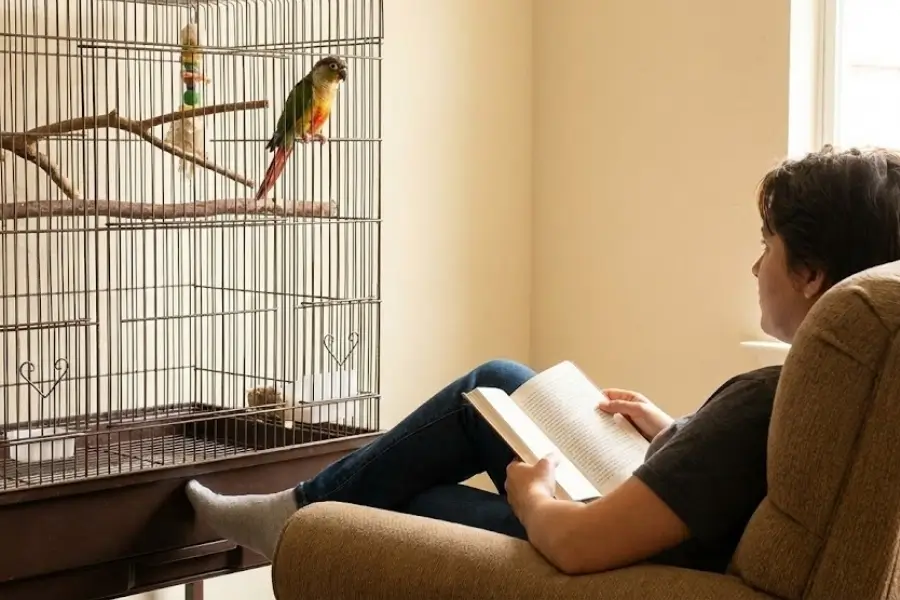
– Be a Calm Presence: Spend time near the cage without trying to interact. Read a book, watch TV, or work on your laptop. Speak to them softly and frequently.
– Read Their Body Language: Learn to recognize signs of fear and relaxation. A fearful bird will have slicked-down feathers and wide eyes, while a relaxed bird will have slightly fluffed feathers and may grind its beak.
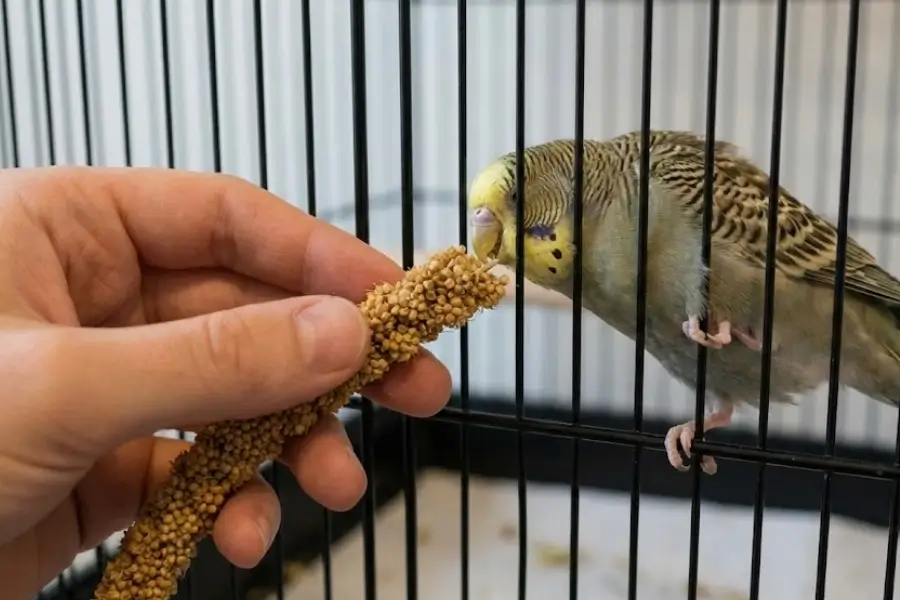
– The Power of Treats: Find out what your bird’s absolute favorite treat is, such as millet or a specific fruit. Start by offering a long treat through the bars of the cage to keep a safety barrier between you.
Step 3: Desensitizing to Hands
Once your bird is comfortable taking treats through the bars, it’s time to slowly introduce your hands inside their territory.
– The Passive Hand: Start by simply resting your hand on the outside of the cage, far from the bird, for a few minutes at a time.
– Inside the Cage: When your bird is comfortable, open the door and rest your hand just inside on a low perch while holding a treat. Do not move toward the bird, let them decide if they want to approach.
– Slow and Steady Wins the Race: Move calmly and deliberately when changing food and water. Avoid sudden, jerky movements.
Step 4: Target Training – A Game-Changer
Target training is an incredibly effective, hands-off method for building communication and trust. It teaches your bird to touch a specific object, like a chopstick, to earn a reward.
– Introduce the Target: Hold a chopstick near your bird. When they look at it, immediately praise them and give a treat.
– Touch the Target: Wait for them to touch the stick with their beak. As soon as they do, reward them.
– Move the Target: Use the target stick to guide them around the cage and, eventually, toward your hand. This shifts the focus away from your hands and onto a neutral object.
Step 5: The “Step Up” – The Final Goal
Teaching your bird to step onto your hand should be the final step, not the first. It’s a massive leap of faith for a fearful bird.
– Use a Perch First: Instead of your hand, offer a handheld perch. Use the target stick to guide them onto it. This is less intimidating than a hand.
– Introduce the Hand: Once they are comfortable with a perch, try offering your hand flat and steady. Use a high-value treat to lure them onto it.
– Respect the “No”: If your bird leans away or shows fear, do not chase them. Remove your hand, let them calm down, and try again later at an easier step.
Conclusion: A Marathon, Not a Sprint
Bonding with a fearful rescue bird is a journey that requires immense patience and empathy. There will be setbacks and days where it feels like you’re making no progress. Remember that every positive interaction, no matter how small, is a victory. The goal is to build a relationship where they feel safe, respected, and loved. The bond you forge will be incredibly deep and rewarding, a testament to the power of understanding.













0 Comments